
How much do we really know about the science of emotion and happiness? (Pre-publication manuscript)

Please note this is the pre-publication manuscript to the article that has been published in the BPS Psych-Talk magazine (also the formatting is not quite right but I’m not sure how to format it properly on here):

Evangelou, G. (2019). How much do we really know about the science of emotion and happiness?. BPS Psych-Talk, 93, 3-4.

Link: https://shop.bps.org.uk/publications/publication-by-series/psych-talk/psychtalk-issue-93-may-2019.html

How much do we really know about the science of emotion and happiness?

Emotion

In terms of what an emotion is and the reasons/functions of it is largely debated, from the Darwinian perspective right across to the social constructivist. This debate may even remain so until the end of time and can be left to philosophers. Science is there to identify the properties and effects of phenomena, and under what conditions they are caused by (Edelman & Tononi, 2013). There are discrepancies about the universality of Ekman’s basic emotional expressions, and emotional language (i.e. fear, anger) due to untranslatable words which leaves this also still up for debate. What science has managed to do is reduce emotion to its raw state via natural semantic metalanguage (Wierzbicka, 2009), attempting to define cognitive scenarios through universal human concepts. Additionally, what can be objectively identified as emotion is an affective system (Blanchette & Richards, 2010) in which we subjectively experience positive and negative states. These states interact with and influence cognition, including higher level cognitive processes such as reasoning, judgement and decision making.

Continue reading “How much do we really know about the science of emotion and happiness? (Pre-publication manuscript)”
Featured post

The neuropsychology of free will: An expensive mechanism (pre-publication manuscript)

Please note this is the pre-publication manuscript to the article that has been published in the BPS Psych-Talk magazine (also the formatting is not quite right but I’m not sure how to format it properly on here):

Evangelou, G. (2019). The neuropsychology of free will: An expensive                mechanism. BPS Psych-Talk, 92, 6-8.

Link: https://shop.bps.org.uk/publications/publication-by-series/psych-talk/psychtalk-issue-92-january-2019.html

The neuropsychology of free will: An expensive mechanism

George Evangelou

Concerns of investigating free will

What is free will? Let’s save for the infinite philosophical rabbit hole for now… Please raise your hand. Congratulations, whether you raised it or not, you exercised your free will to do so (I hope). That will suffice as a basic example and allow us to move forward. Conflict with free will and its subject to question has been around long before neuroscience, whether it be: theology (the paradox between an omniscient being and our free will), physics (subject to physical laws of the universe), biology and evolution (subject to our genetic make-up and survival of the fittest) or of course, philosophy (“Man is born free, but everywhere he is in chains”; Rousseau, 1762). Continue reading “The neuropsychology of free will: An expensive mechanism (pre-publication manuscript)”

Getting older is not the definition of growing up: Important things I’m learning as I grow

Is age just a number? “No” is what the common answer tends to be. On the surface that may be correct, as there are things that just naturally come with age such as physiological growth and general life experience within the laws of society (i.e. alcohol consumption and consensual sex). However, knowledge, wisdom and alternative types of experience can be learned at your will.

See, time is a relative concept and your age may depend on how you’ve used time.shutterstock_271332740 Continue reading “Getting older is not the definition of growing up: Important things I’m learning as I grow”

Keep the destination in mind but don’t discount the journey: “Experience vs memory” (Daniel Kahneman)

There will be two points in this post and they are interlinked, let’s get the first and obvious one out of the way before getting to the juicy psychological evidence that we are less aware of (the experiencing self vs the remembering self).

We’ve all heard those “it’s not about the destination, it’s about the journey” kinds of quotes, while it’s not completely true I am inclined to agree with the logic behind this notion. The destination lasts all of what, a moment? Now how long was the journey? Weeks? Months? Years? At least, the journey tends to be considerably longer, so you had better pay attention to it. All too often I hear  Continue reading “Keep the destination in mind but don’t discount the journey: “Experience vs memory” (Daniel Kahneman)”

Thought as force: What dissociative identity disorder (DID) suggests about the “mind over matter” phenomenon

I hope by now you have all seen the film Split and if you haven’t then you should probably go and watch it because it’s fascinating. A truly captivating performance by James McAvoy who delivered a memorable portrayal of what is deemed a very controversial disorder, as well as a striking performance by Anya Taylor-Joy and the rest of the cast which made for a brilliant film overall. Of course, the film stretched the spectrum beyond possibility (as far as we know…) with The Beast but it is a fictional film after all. What raises interest however Continue reading “Thought as force: What dissociative identity disorder (DID) suggests about the “mind over matter” phenomenon”

The Black Swan Theory of Heath Ledger’s Joker and analysing some of the points made by The Joker in The Dark Knight

Black Swan Theory of Heath Ledger’s Joker

Let’s start with my theory of Heath Ledger’s performance and the ill-fated result in his tragedy. I think it’s all-round agreeable that his display of The Joker was nothing short of spectacular, it is arguably perfect – “perfect?”, perfect is typically impossible right, I know but let me explain the concept. Continue reading “The Black Swan Theory of Heath Ledger’s Joker and analysing some of the points made by The Joker in The Dark Knight”

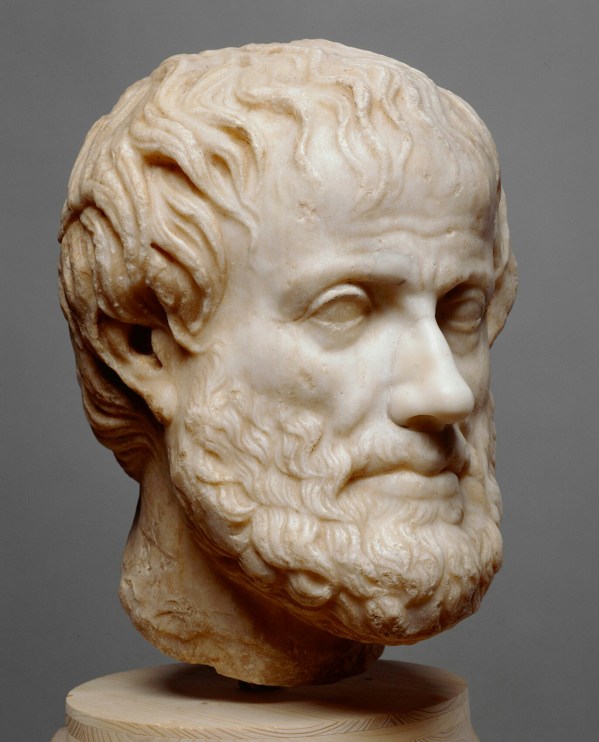
“It is the mark of an educated mind to be able to entertain a thought without accepting it” – Aristotle

Okay so before I proceed to posting my theories and analyses of… well, anything that intrigues me, I thought I’d start by explaining my interpretation of this quote. “Why?” you ask, well mainly because some of the thoughts I put across may not be the popular opinion so I want the readers to understand the way my mind works and this will help to convey that; also, because I do love a good quote (as you will come to learn about me). Continue reading ““It is the mark of an educated mind to be able to entertain a thought without accepting it” – Aristotle”

Create a website or blog at WordPress.com

Up ↑